22 reviews on Clutch
Website strategy for Marketing VPs leading a B2B rebrand
Your company has outgrown its brand, and the rebrand sits with you.
I settle what it stands for and what the website has to prove before anything gets designed. The direction comes first; the build follows it.

.svg)

.svg)



Clients include Personio, Vertice, Humin, Sedric, deskbird and Kyan Health, with a combined valuation above $10B.
What I know is true about B2B rebrands

Good strategy removes options
Strategy gets stronger as options close. Keeping every preference alive is not alignment.

Consensus is not direction
A room can agree on safe language and still avoid the real choice. Good strategy makes trade-offs explicit.

Design reveals avoided decisions
Visual work forces choices. When strategy is unresolved, those choices land on designers by default and return later disguised as feedback.

Leadership sets the ceiling
A rebrand cannot become clearer than the decisions leadership is willing to make. The rest of the team can sharpen those choices, not invent them.

Specialists amplify direction
A strong agency can execute a clear direction brilliantly. Give it unresolved strategy and it will end up making business decisions by proxy.

Consistency beats cleverness
A clever homepage is not enough. The direction has to hold across the website, marketing and sales long after the meeting ends.
What clients say the strategy changed

“Bojan's team took on our full website refresh project and gave it a clear structure. The result is a site that better aligns with our brand, brings the product to life through animations, and is far simpler for our team to manage day to day. It's rare to work with someone who can handle the thinking and the execution and leave you with something this clear.”
Eldar Tuvey, Founder & CEO at Vertice

“Professional and dedicated to getting the job done at the highest quality. The full website redesign improved our lead generation, SEO, and user engagement, and brought the product to life with animations that fit the brand perfectly.”
Remy Rosen, VP of Marketing at Sedric

“My team and I have been fortunate to have worked with Bojan for a while now at Personio. He's an incredibly capable designer, supporting us on a number of major launches, and most recently our major website relaunch where his motion design expertise helped us to deliver the best website in our company history. Dependable and with a high quality standard. I wouldn't hesitate to recommend him.”
James Ward, Head of Website at Personio

“Bojan's team's redesign efforts resulted in improved organic visibility, enhanced search rankings, longer user sessions, and increased engagement. They were highly attentive to details, responsive, and communicative. Their ability to balance design and functionality stood out in our partnership.”
Alex Stojanovic, Founder & CEO at Fiscallion

“Bojan's team was a fantastic partner on our brand awareness video project. They collaborated closely with our design, marketing, and content teams, brought great creative energy to the process, and delivered an outstanding final result. I’d highly recommend him to anyone looking for high-quality animation work that is both strategic and beautifully executed.”
Alexander Laugomer, VP of Marketing at Kyan Health
Direction comes first
I define the direction the brand and website need to follow: what the company stands for, who it needs to persuade, and what has to stay consistent across the work.

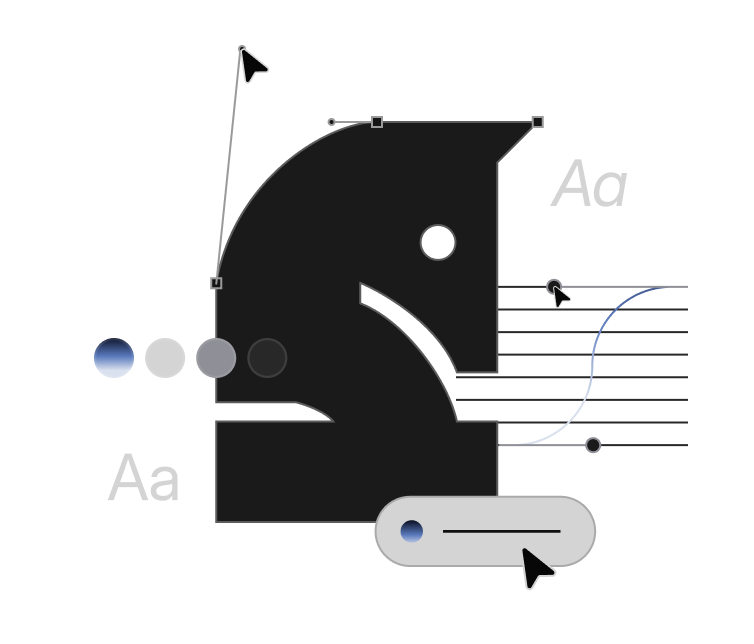
Onward, the agency I co-founded, carries that direction into design and development. The decisions and the build stay connected from start to finish.
I’m Bojan, a B2B website strategy consultant
I did not start in strategy. I spent more than a decade inside the work that comes after it: web design, motion, UX and digital execution. That meant seeing rebrands from the point where abstract decisions become real screens, real copy and real constraints. It also taught me which questions execution can solve and which ones arrive too late.
Latest insights



Questions about fit
Who do you work with?
Growth-stage B2B companies where marketing owns the website and the brand has fallen behind the business. Usually a VP of Marketing carrying a rebrand the board is already watching.
When is the right time to bring me in?
Before the brief goes out. Once design has started, a change of direction turns into rework. Alignment is cheapest while it is still a decision, not a deliverable.
What size companies do you work with?
Typically 50–500 people. Most are in SaaS, AI, fintech or healthtech, with enough internal complexity that the website involves more than one team and more than one opinion.
What needs to be true on your side?
Marketing needs ownership and access to leadership. The work fits when the people shaping the company can make decisions together, rather than passing feedback through layers.
What if leadership isn't aligned yet?
That is usually the reason to start. The work turns disagreement into a decision: options on the table, trade-offs made explicit, one direction people can commit to. Alignment is the output of the work, not a precondition.
The fit call, 20 minutes
Find out where your direction stands
If you're the person carrying the rebrand, the next step is 20 minutes: you describe the situation, I walk the process, we both decide if it fits.