From one ranking keyword to 260, because the strategy came first
Fiscallion sells fractional CFO services to tech companies. It is the kind of purchase a founder thinks about for weeks, and in May 2025 the whole case for it lived on a single page that ranked for one keyword. Here is what changed once the decisions were made before the design.
Organic keywords
Authority score
Citations in AI answers, all non-branded

“Bojan's team's redesign efforts resulted in improved organic visibility, enhanced search rankings, longer user sessions, and increased engagement. They were highly attentive to details, responsive, and communicative. Their ability to balance design and functionality stood out in our partnership.”

The situation
The whole site was one page. That page had to be the pitch, the services list and the proof all at once, so it did none of those jobs well. A founder searching for a fractional CFO never found it. An AI assistant asked to recommend one had nothing specific to cite.
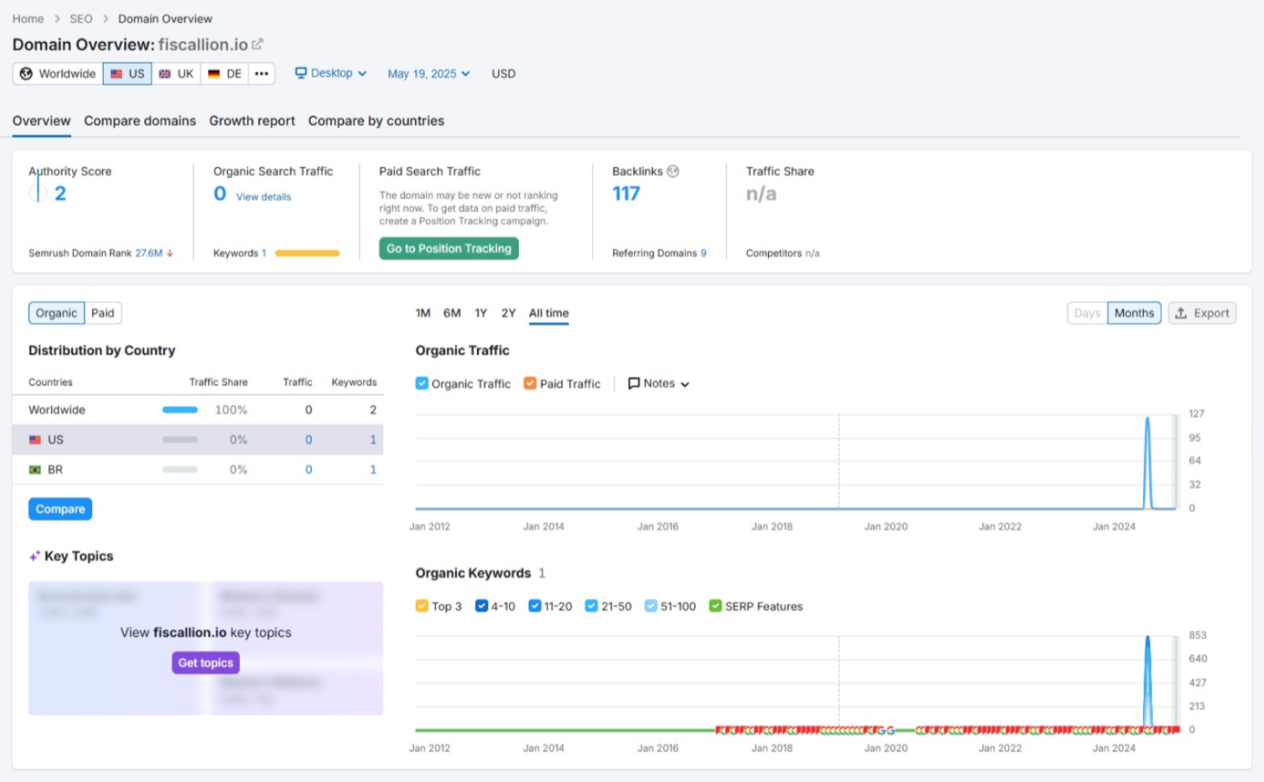
Semrush put it plainly: one ranking keyword, authority score 2, organic traffic zero.
Map the category before writing a sitemap
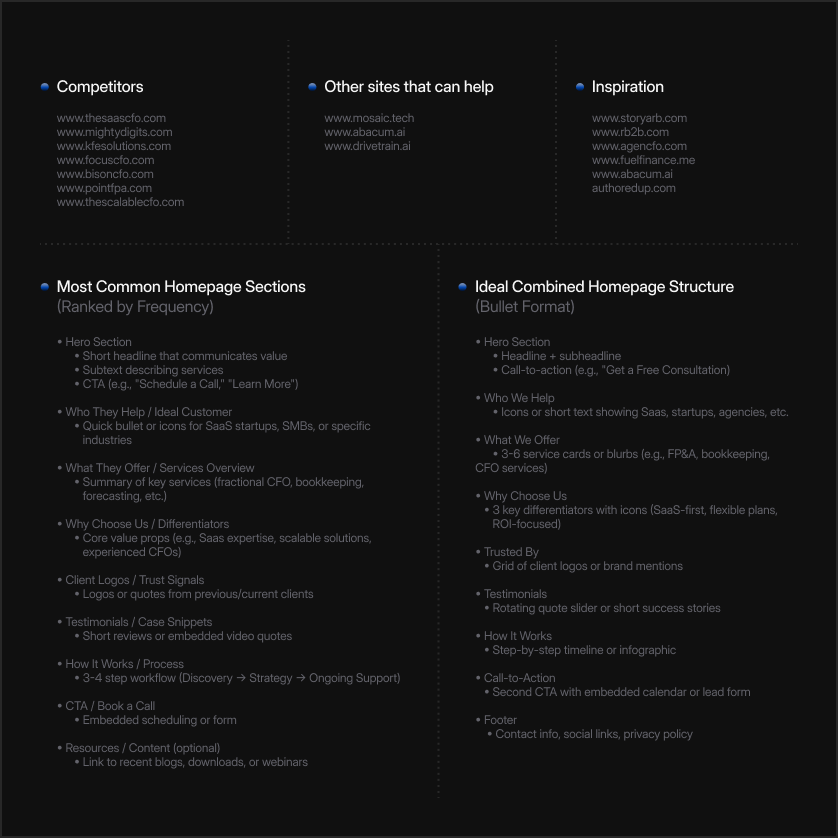
Before touching the sitemap I mapped how comparable fractional CFO firms build their sites: what every one of them has, where they all crowd, and what none of them bothers to explain. The research ended as two lists: the sections every competitor runs, ranked by how often they appear, and the combined structure worth building against. Every firm in this category sounds confident. Very few are easy to follow. So the opening was to be clearer rather than louder, with a site where a buyer gets their questions answered in the order they ask them.
Close the positioning questions before wireframes
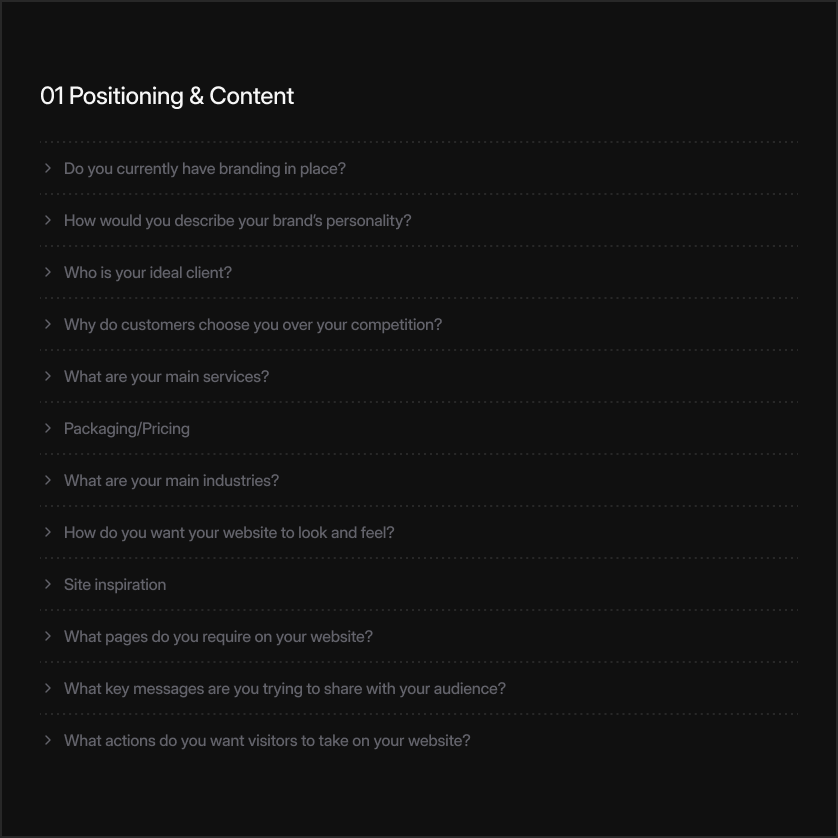
The engagement opened with the questions most website projects skip. Who is the ideal client. Why do customers pick you over the next firm. What are the main services, what should pricing say, what should a visitor do next. Every answer went into writing while the project was still documents. By the time anyone opened Figma, the arguments were over.
Decide which pages earn their place
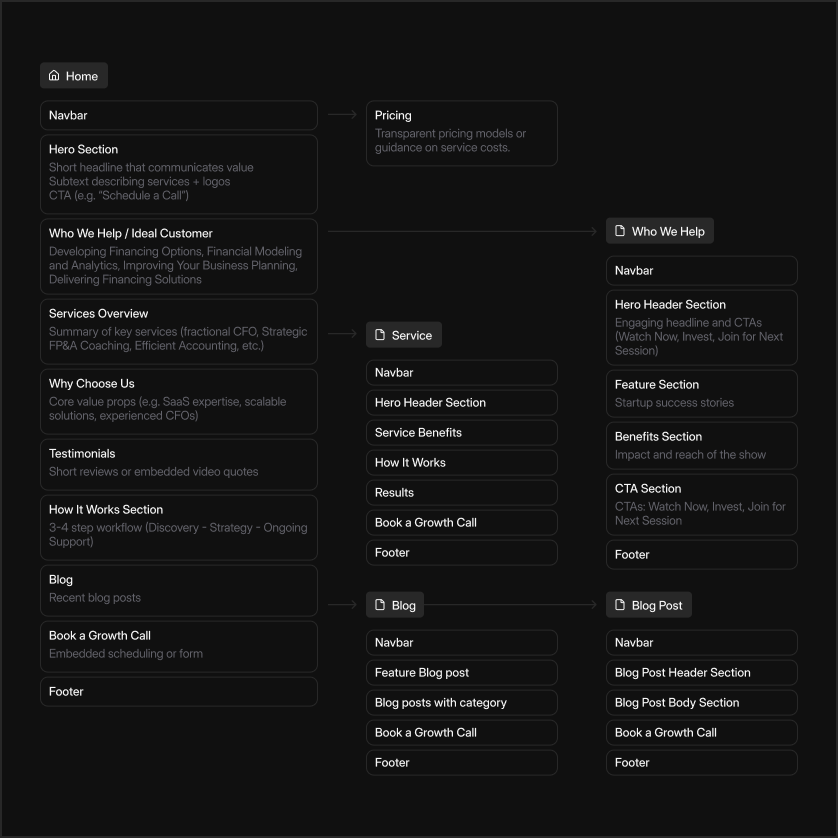
The one-pager became a small set of pages, each with a defined job: a homepage that answers who we help, what we offer and why choose us, in that order; a Services page with its own results and process; a Who We Help page; and a blog built to rank. Nothing got in just because a sitemap usually has it. Every page had to carry a question the buyer actually asks.
Decision 4
Give the blog a job
The blog earned its place for one reason: Fiscallion's buyers ask precise finance questions. What NRR is. How burn multiple works. What deferred revenue does to a SaaS balance sheet. The plan was to answer those questions properly, one page per question. That is the decision AI search later rewarded.
The build came last
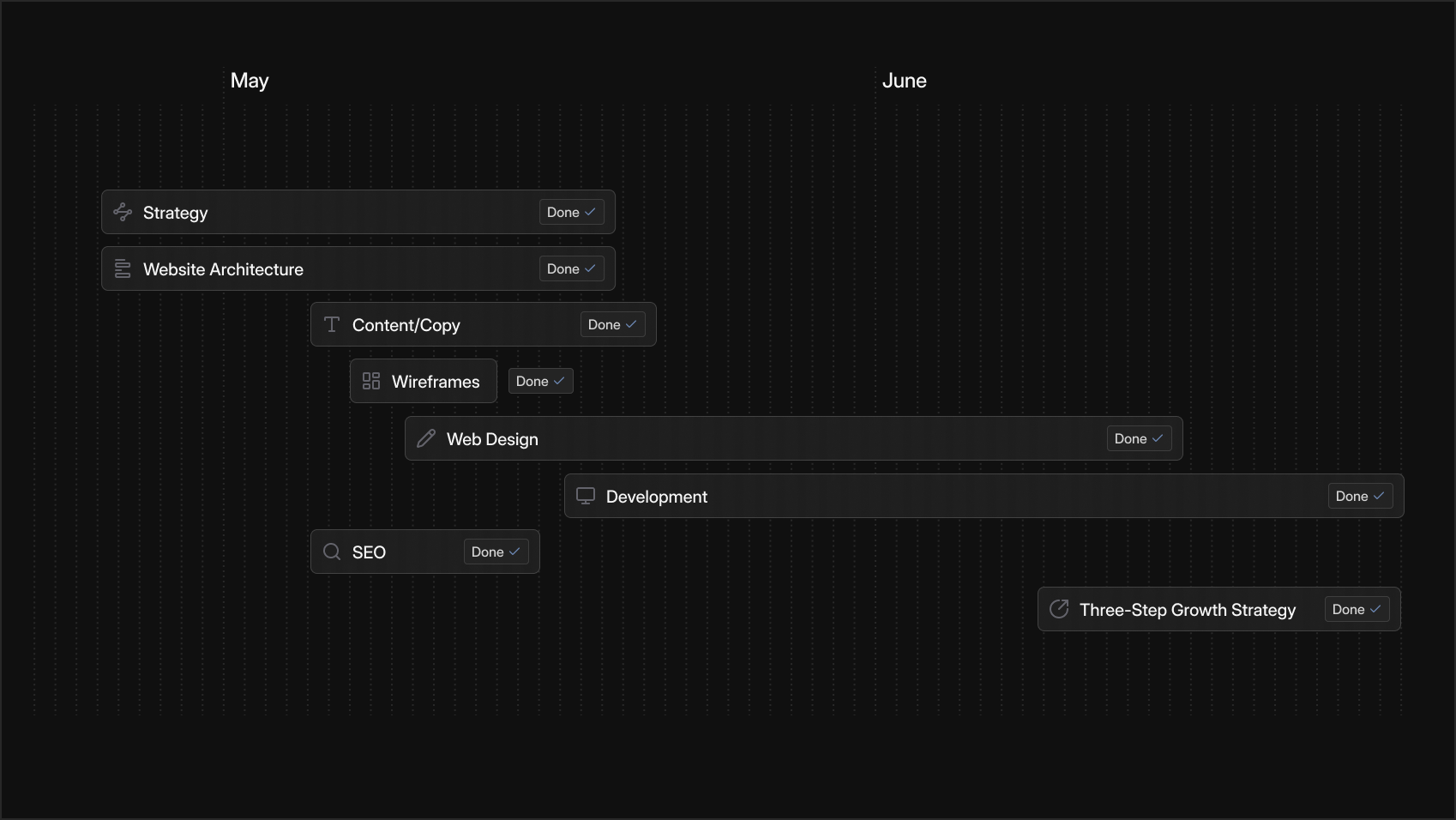
The project record shows the order. Strategy and website architecture opened on 26 May 2025 and closed on 18 June; wireframes, design and development followed on the same board, executed by Onward against decisions that were already made.
Build Last is usually a promise consultants make. Here it is a dated plan anyone can read.
The results
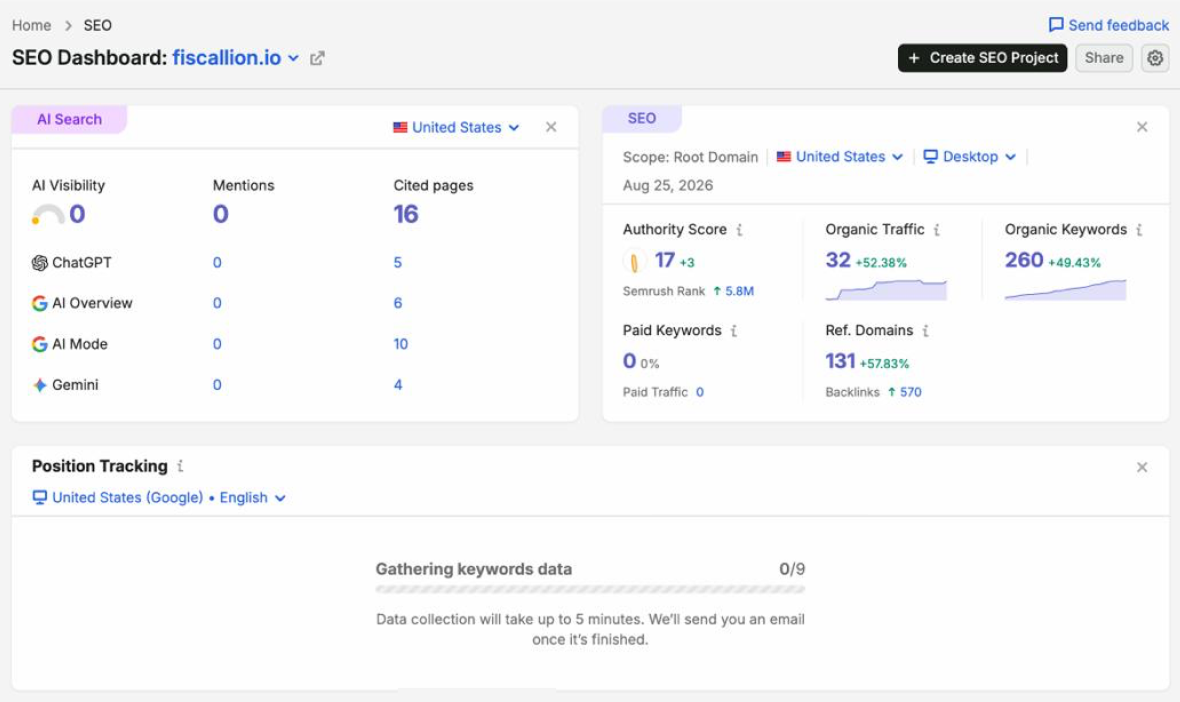
Same tool, same window: Semrush, May 2025 against August 2026.
Organic keywords, from 1. The site went from ranking for essentially nothing to a real search footprint
Authority score, from 2
Cited as a source in AI answers
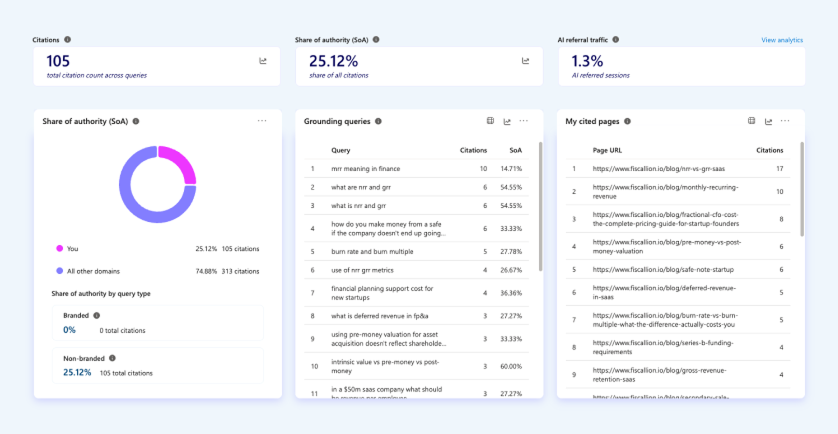
When someone asks an AI assistant what NRR means or how burn rate works, Fiscallion is now part of the answer: 105 citations across AI engines and a 25% share of authority on those queries. None of the citations mention the brand, because the people asking have never heard of Fiscallion yet. The pages being cited are the blog articles.
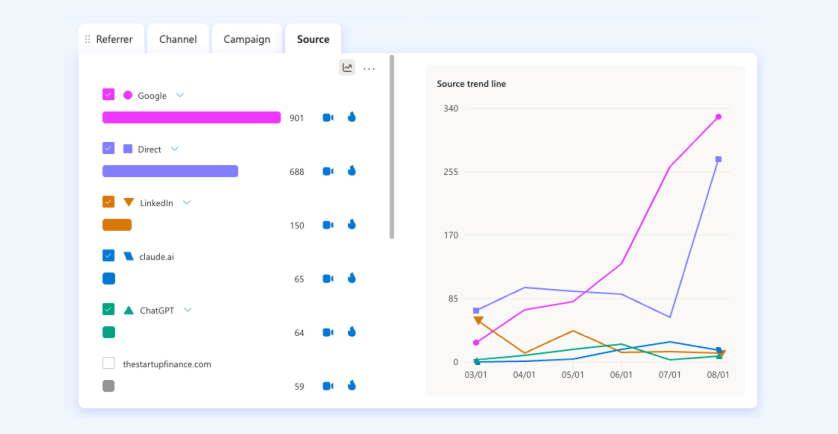
The channel is small and it is real. Claude and ChatGPT now show up in the referral report, at 1.3% of sessions so far.
The fit call, 20 minutes
Find out where your direction stands
If you're the person carrying the rebrand, the next step is 20 minutes: you describe the situation, I walk the process, we both decide if it fits.